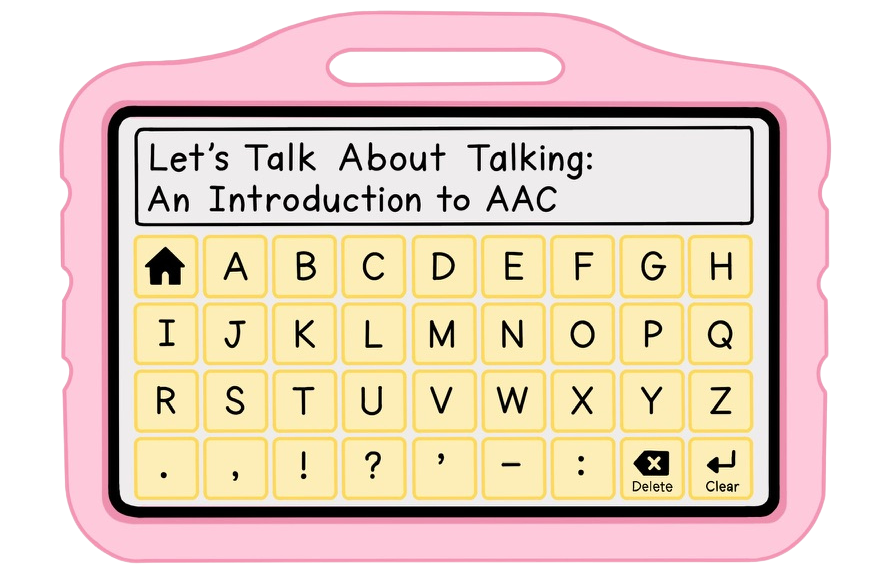
What is AAC?
AAC stands for Augmentative and Alternative Communication. AAC includes all the ways people communicate besides speaking. It can be used by individuals who have difficulty speaking, are unable to speak, or whose speech may be difficult for others to understand.
AAC can take many forms. Some people use simple communication boards, picture cards, gestures, or sign language. Others use high-tech devices, such as speech-generating devices or tablet-based communication apps. These tools help individuals express their thoughts, needs, feelings, and ideas in a way that works best for them.
People of all ages may use AAC. Some individuals use AAC for a short period of time, while others use it throughout their lives. AAC supports communication in many settings, including school, home, the community, and social activities. Using AAC does not prevent someone from learning to speak. In fact, research shows that AAC often supports language development and can help individuals become more effective communicators.
Communication is a basic human right. By learning about AAC, we can create more inclusive environments where everyone has the opportunity to participate, build relationships, and share their voice. Understanding AAC helps us become more patient communication partners and better friends, classmates, teachers, and community members.